The Underestimated Power of AI: The Prompt for Reinspection
AI is having a profound impact on our entire world, fundamentally changing how we approach problems and opportunities. Businesses are scrambling to incorporate AI into their products and find ways to improve efficiencies. Schools are struggling with the impact of AI on learning. Governments are concerned with agentic AI and its potential to expose secrets and vulnerabilities, and loss of entry-level jobs for recent college graduates.
In my business, I work with executives and teams to help them maximize organizational performance. Naturally, the AI quandary is impacting our work as well.
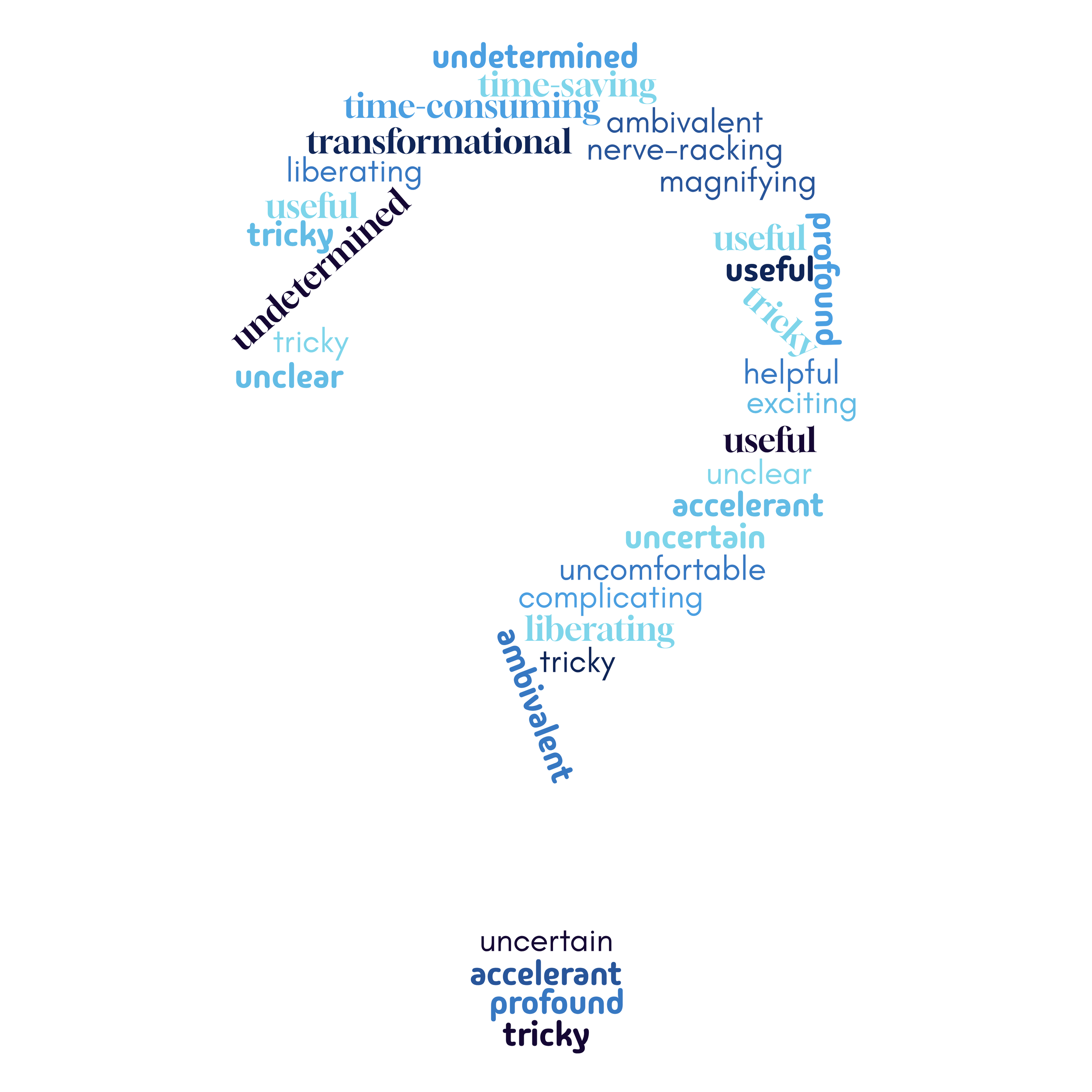
In several recent workshops, I asked leaders to choose one word to describe the impact AI has had on their jobs. The answers were a fascinating mix of anxiety and optimism: Complicating, Liberating, Accelerant, Time-consuming, Time-saving, Profound, Nerve-racking, Useful, and Transformational.
These responses are not surprising, but they clearly indicate the overall sentiment. AI is changing the world in real-time, and no one knows exactly where it will take our global society. As a student of teams and corporate cultures, I am fully intrigued.
I see tremendous value in AI despite the risks. It is changing the way I approach my work, but there is an underlying transformation happening that is getting much less airtime and attention.
AI is making us rethink everything, and that is awesome.
I am a big fan of Adam Grant’s quote from Think Again: “There is no such thing as a best practice, only better practices.” You see, when we label something as a "best practice," we stop inspecting it.
When a team defends a broken or outdated process simply by claiming "that's our best practice," they are essentially pushing a heavy cart with square wheels. They are working far harder than they need to because they haven't paused long enough to notice the round wheels sitting right there in their wagon. AI is the ultimate disruption that forces leaders to stop the cart, look at the wheels, and adopt a better way forward.
This reinspection naturally leads to another critical, yet underutilized, leadership tool: the Stop Doing List. Often, when we ask, "How does AI change this process?" the most profound answer is that it shouldn't just change it—it should eliminate it entirely. AI is helping executives identify busywork and confidently add outdated routines to their Stop Doing lists, freeing up human capital for actual strategic thinking.
This dynamic is especially critical for large organizations navigating what I call the Paradox of Size. As companies scale, their processes naturally become rigid, bureaucratic, and too heavily layered to mitigate risk. Ironically, the very processes meant to protect a large company often slow it down to a crawl. AI acts as a powerful counterbalance to this paradox. By prompting constant reinspection, AI forces massive enterprises to shed unnecessary weight and operate with the curiosity, speed, and agility of a startup once again.
To me, this is the most profound value of AI. It is getting everyone to inspect their established processes and approaches. AI might not always be the final solution, but the simple act of inspection is enough to drive meaningful change and transformation.
I have seen companies drastically improve their onboarding, customer engagement, financial controls, and go-to-market strategies just by pausing to ask the question: Does AI change how we should approach this?
This dynamic is super powerful, yet strangely understated and underestimated. If you have not thought about why your organization does things the way it does lately, let AI be the prompt for your reinspection.
The Leadership Challenge: Try this today if you want to test the power of AI as a reinspection catalyst in your own organization. Pick a process you assume has to be difficult and feed it to an AI.
One of my favorite use cases is the dreaded global offsite planning. Take a spreadsheet with the home zip codes of 22 global team members, upload it to an AI, and prompt it: "Determine the most cost-effective city for this team to travel to for a 3-day offsite, factoring in estimated airfare, hotel rooms, meeting space, meals, and ground transportation." A task that was historically nearly impossible—or required days of manual spreadsheet math—is now solved in seconds.
Look at your operations today: Where else are you pushing a cart with square wheels when AI is offering you the round ones? Maybe AI is not part of the solution, just the prompt you need for inspection.