
Why Leaders Must "Show Their Work" to Earn Corporate Partial Credit
When coaching executives who struggle with execution, I frequently encounter a relatable tension. High-performing leaders often prefer chasing new opportunities over the tedious work of completing tasks they have already started. This is the classic "Entrepreneur's Dilemma."
The challenge when working in a corporate setting, however, is that task completion is usually the primary metric of success. Unlike high school, failures to finish complex projects rarely receive partial credit. If you don't cross the finish line, you often get a big, fat zero.
While working recently with a high-potential Vice President who was struggling to GSD (Get Shit Done), I suggested a strategy shift that seemed simple, but profound: "Show your work."

That advice brought back a vivid memory from 9th grade math at Berkshire School. I had just received a "C" on a major exam, and I was shocked. My teacher, Leslie Clifford approached me after class and asked, "Why did you only show your final answers on the exam?"
Apparently, I had gotten several complex questions wrong. He went on to explain that had I "shown my work"—the equations used, the order of operations, the underlying logic—I would have been eligible for partial credit.
I had sheets of paper containing the formulas and calculations I used, but I had thrown them away. I thought he wanted a clean exam with just the results. As it turned out, my approach to every single problem was 100% correct; I had made silly errors, like carrying the wrong digit.
His point was crucial for a student: proving my methodology was sound was as important as the result.
Now, I know what you are thinking: In business, the final answer is everything. The P&L, the market share, the successful launch—those outcomes are how we are ultimately graded. And you're right. But that is exactly why "showing your work" is even more critical in a corporate setting.
Putting Partial Credit Into Action
This concept was recently validated in a profound way by Ron Gabrisko, the Chief Revenue Officer at Databricks, whom I have had the privilege to coach. Ron recently posted on LinkedIn about promoting over 80 people within his sales organization.
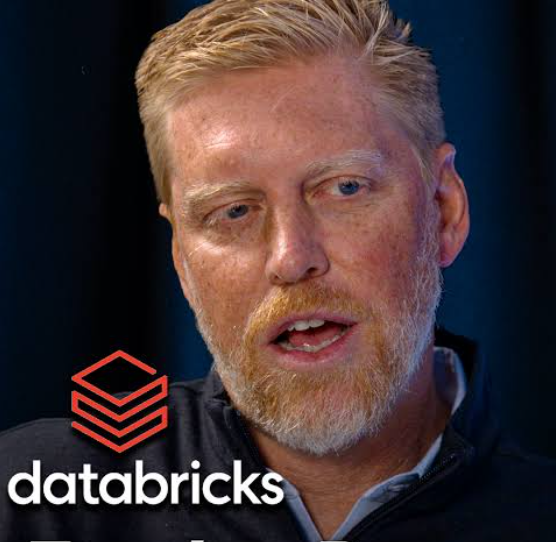
Ron Gabrisko, CRO at Databricks
In an industry obsessed with the final outcome—the closed deal—Ron’s reasoning for these promotions was rooted in the intermediary steps. He noted that the promoted individuals didn’t just close a few big deals. Rather, they were promoted because they validated the 'behind the scenes' process day in and day out.
Ron highlighted their consistent grit, countless hours of preparation, and relentless execution—the visibility of their methodology. While the final outcome was the promotion, the integrity of their standard in the steps leading to that outcome is what Ron recognized and rewarded. They successfully "showed their work," and they earned the equivalent of significant corporate credit.
In my experience working with Ron, grit is the secret sauce he looks for in his people. As a college athlete Ron learned that grit and hard work are as important if not more important than raw talent. He has translated that drive into the sales culture at Databricks.
Process visibility is not about seeking a participation trophy; it is about proactive risk mitigation. If you don't cross the finish line, you get zero credit. But if you pull back the curtain and show exactly what is happening behind the scenes, you allow your team, your boss, and your organization to help you course-correct silly diagnostic errors before they become fatal failures.
Fast forward to my current role as an executive coach. When high-performing leaders suffer from competing priorities and feel like they can never get things across the finish line, I share that 9th-grade math example.
This also relates to an important lesson I learned in graduate school regarding organizational behavior. At the time, I was completely focused on destinations—outcome-oriented to a fault. My professor challenged me to stop obsessing over the final grade and focus instead on the intermediary steps.
While that advice landed harshly, it stuck. "Focusing on the steps" doesn't mean moving slowly; it means making the "behind the scenes" strategic pivots, data analysis, and operational methodology visible. By validating those intermediate steps as product rather than just process, leaders earn the institutional trust needed when outcomes take longer than expected.
This concept of making "behind the scenes" work visible is the absolute prerequisite for another one of my favorite diagnostic tools: The Mid-Mortem. While showing your work provides individual visibility, a formal mid-mortem creates the organizational structure to evaluate that work mid-stream, ensuring final quality isn't eroded by artificial deadlines.
When combined, "showing your work" is the fuel that powers a successful mid-mortem. True accountability isn't just about the final outcome; it's about the methodology that gets you there. If you want your organization to trust your leadership when the final result is delayed, stop hiding the sheets of paper where you did the calculations. Open the curtain, show the work happening behind the scenes, and you may find that validating the process is the only way to save the outcome.